

ANILCA Explained: The Most Consequential Public Lands Law in American History
It protected 104 million acres in a single signature. It also wrote in the escape hatches that are being used against those same acres right now.


A quick note before we start. As you read this, Jim and I are somewhere in the Brooks Range, past the end of cell service, at a basecamp well above the Arctic Circle. We’re out for a while so comments and emails will sit until we’re back on the grid. If you missed where we’re headed and why, start here. This is the law that made the country we’re standing in, and the law that’s being used to put a mining road through it.
In case you’re new here – this is the latest in our series on the laws and tools that stand guard over America’s wild places. We’ve covered NEPA, the Roadless Rule, the Endangered Species Act, the Congressional Review Act, FLPMA, and the Wilderness Act. ANILCA supplied 57 million of the 111.7 million acres in that wilderness system, in a single signature.
What ANILCA is and what it did
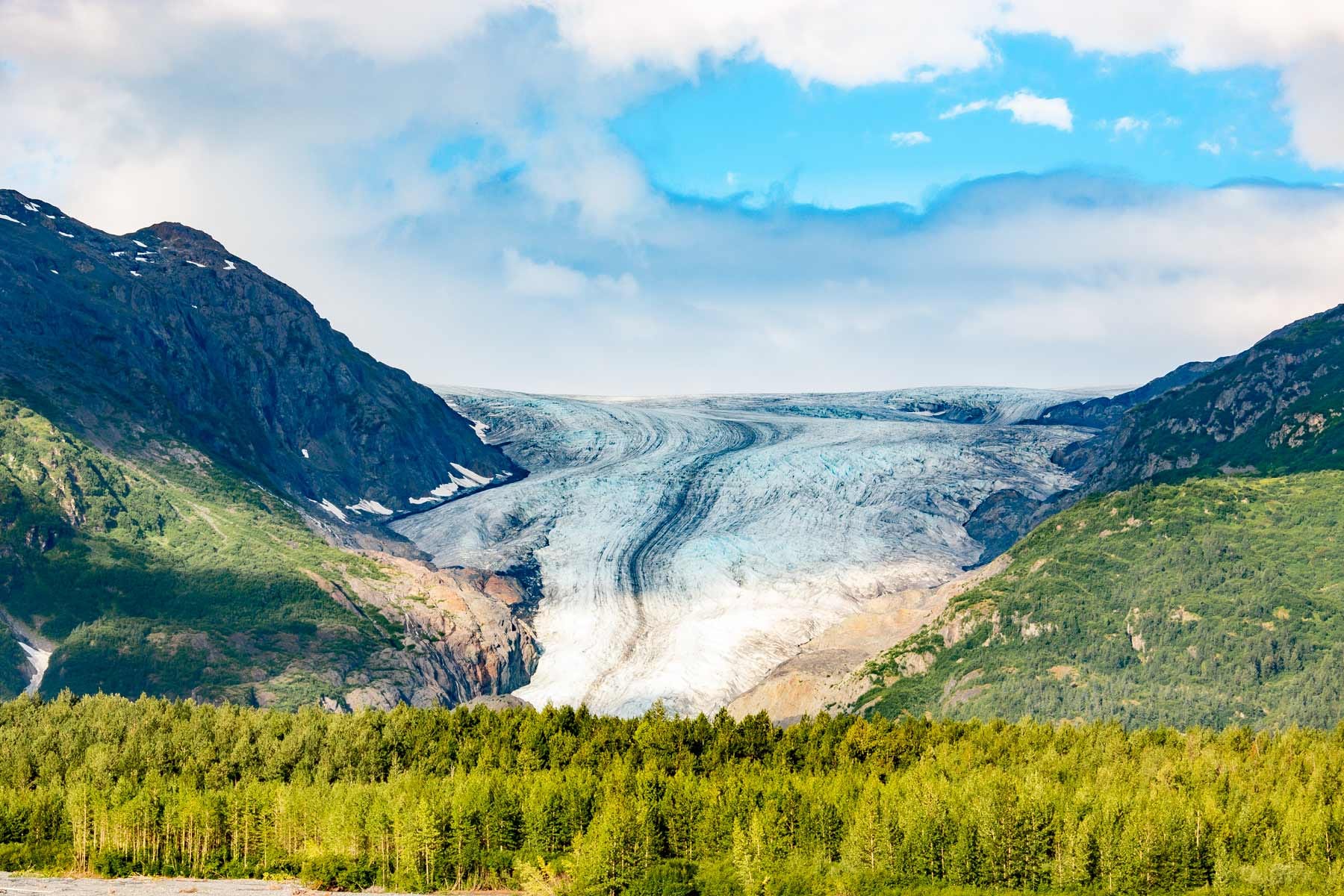
Jimmy Carter signed the Alaska National Interest Lands Conservation Act on December 2, 1980, four weeks after losing re-election to the presidency. It protected more than 104 million acres, an area larger than California. By the Park Service’s own count, ANILCA created or added to 13 national parks, 16 wildlife refuges, 2 national forests, 2 national monuments, 2 conservation areas, and 26 wild and scenic rivers. Fifty-seven million of those acres came in as designated Wilderness, tripling the National Wilderness Preservation System.
Gates of the Arctic, Kobuk Valley, Lake Clark, Wrangell-St. Elias, and Kenai Fjords all date to that afternoon. Denali, Katmai, and Glacier Bay got bigger. The national park system roughly doubled in size. Nothing before or since comes close, and nothing is likely to, because there isn’t another Alaska.
It was and is likely to always be the single largest act of public lands protection in history.
How it happened
The clock started with the Alaska Native Claims Settlement Act in 1971. Section 17(d)(2) of ANCSA let the Interior Secretary “withdraw” up to 80 million acres of Alaska for study as future parks, forests, refuges, and scenic rivers. Those withdrawals had an expiration date of December 18, 1978. If Congress didn’t act by then, the land opened back up to state selection and mineral entry.
Congress didn’t act. The House passed a strong Alaska lands bill, H.R. 39. The Senate sat on it. In the fall of 1978 Carter wrote to Cecil Andrus, his Interior Secretary, asking for written recommendations by November 27 on what the administration could do before the deadline hit, and specifically on whether the Antiquities Act of 1906 was a workable tool. Andrus told him it was. On December 1, 1978, Carter signed proclamations establishing seventeen national monuments covering roughly 56 million acres. Thirteen went to the Park Service.
Alaska officials took it about how you’d expect and in a very similar way to how Arizona officials took the use of the Antiquities Act at the Grand Canyon. Effigies burned in Fairbanks. At the eventual signing ceremony in 1980, Mo Udall told the story of a booth at the Fairbanks fair where for a quarter you could throw a beer bottle at a photograph, and the photographs on offer were Carter, Andrus, Udall, and the Ayatollah. Udall seemed to enjoy telling it.
The monuments did what Andrus said they’d do, which was force the Senate to negotiate. Then Reagan won in November 1980, and the House decided a weaker Senate bill signed by Carter beat whatever it would get from the next Congress. The House passed the Senate version on November 12. Carter signed three weeks later.
What Alaska got in exchange
Every anniversary post about ANILCA stops at the acreage. The law was a trade, and the other half of the trade is still sitting in it.
Congress set up a single process for pushing roads, pipelines, and powerlines through the new parks and refuges, and inside that process it handed road builders something nobody else in public lands law gets. When a federal agency turns a project down, the applicant can appeal straight to the President. No appeal runs the other way. If the agencies say yes, a village downstream has nowhere to send anything.
It guaranteed anyone who owned land inside the new boundaries a right to reach it, “for economic and other purposes,” which is a permanent hole in the fence around every unit ANILCA drew. It promised rural Alaskans a subsistence priority, first claim on the fish and game they actually live on, which is the best thing in the law and which the State of Alaska has been fighting in court ever since.
And in the same handful of paragraphs where Congress created Gates of the Arctic, it wrote that there was a need for a road across the western end of the new park, running from the Ambler Mining District out to the haul road, and that the Interior Secretary shall permit it. The word Congress picked was shall. That sentence is the foundation of every argument for the Ambler Road and it isn’t a weak one. When AIDEA (Alaska Industrial Development and Export Authority) and the White House say that road is lawful, this is what they’re pointing at.
The industry lawyers have a favorite clause in here too. Congress wrote into the statute that ANILCA had struck the right balance and that the need for any more conservation designations in Alaska “has been obviated thereby.” People call it the no more clause. To back it up, Congress added that no president or Interior Secretary can protect more than five thousand acres in Alaska unless Congress passes a resolution approving it within a year. What Carter did with a pen in 1978, nobody gets to do again.
The boundaries mean less than they look like
ANILCA drew lines around 104 million acres and then said the state, Native, and private land and water sitting inside those lines stays outside park rules. In 2019 a unanimous Supreme Court applied that to a moose hunter named John Sturgeon and his hovercraft on the Nation River, inside Yukon-Charley Rivers National Preserve. The Court held the river isn’t public land, so the Park Service couldn’t enforce its hovercraft ban there. It took the case twice to get there.
The hovercraft is the small version. Alaska’s parks are threaded with inholdings and navigable water the agencies can’t manage as parkland, and every one of those is a spot where ANILCA’s map and ANILCA’s authority don’t line up.
Where the law is being used right now
Last December, Congress finished off the Central Yukon Resource Management Plan. BLM had spent about a decade on it, worked with roughly twenty tribes, and finalized it in November 2024 with 3.6 million acres of conservation designations inside a 13.3 million acre planning area. Representative Nick Begich and Senators Dan Sullivan and Lisa Murkowski ran a Congressional Review Act resolution at it. The House passed it in September, the Senate 50 to 46 in October, and Trump signed on December 11. The reason the delegation gave was that the plan conflicted with ANILCA. The law that built the protections is now the argument for erasing them.
Then Ambler. BLM told AIDEA no in June 2024, after Interior went back to federal court and conceded legal errors in its own 2020 review, and after a do-over that held hearings in twelve communities, ran Talking Circles in the villages, brought five tribal councils in as cooperating agencies, and found 66 communities whose subsistence could be significantly restricted. NANA, the Native regional corporation for that country, had walked away from the project a month before, over a lack of real consultation. Interior noted there were no active mines in the district and no mine plans pending. So AIDEA used the appeal. Trump signed on October 6, and the order restores the 2021 permits on their original terms, which puts the whole project back on the 2020 analysis, the one Interior itself had admitted was flawed.
Meanwhile the administration is moving to sell off millions of acres across Alaska and has spent the year manufacturing emergencies to justify reaching into old statutes. No president can answer any of that at Carter’s scale, because Carter’s tool is the one thing ANILCA took off the table.
Who gets left out
The pattern across all of it is about process. A presidential appeal has no public comment step. The analysis covering the road’s park crossing was written from the start to be immune from judicial review. A court hearing an ANILCA transportation case can hold ground for ninety days at a stretch and no longer, unless it reaches a final judgment. A Congressional Review Act resolution takes no hearing, no comment period, and no findings at all.
Ten years of work and twenty tribes on the Central Yukon plan ended on a 50 to 46 floor vote. Sixty-six communities have been told on the federal record that a road may significantly restrict how they feed their families, and not one of them was given a say in the decision that brought it back. That’s worth being angry about no matter what you think about copper. If the people pushing all of this were confident that Americans wanted it, they’d be inviting us into the process instead of engineering routes around us.
Gates of the Arctic exists because of ANILCA. So does the argument for running copper trucks through it, so does the rule that keeps any future president from protecting Alaska the way Carter did, and so does the case for wiping out a plan twenty tribes helped write. A law passed in 1980 to settle the Alaska question is now the main instrument being used to reopen it.
If you want to know how your delegation votes when public lands are on the line, our Congressional Public Lands Scorecard has the record on all 535 of them. When a comment window opens on something you care about, the Public Lands Action Network will tell you what’s open, what’s at stake, and how to file.
Then send this to somebody who’s never heard of ANILCA and has opinions about Alaska anyway. Most people who love these places have no idea the road was written into the law that made them.
Until next time,
Will
More Than Just Parks is reader funded. We don’t take money from billionaires, trillionaires or corporate sponsors, which means nobody gets to tell us what to report or where to point a camera. A paid subscription runs about the cost of a bundle of firewood a month, and it’s what keeps us defending our public lands.
Most people don’t realize how consequential Jimmy Carter was when it came to conservation.
In fact, a case can be made that he was America’s Greenest President.
https://morethanjustparks.com/jimmy-carter-americas-greenest-president/
Thank you, Will, for all you do for our country. You are a true patriot. 🩷🤍💙